
ARQUITECTURA
Museo de Arte Asiático de San Francisco: la rehabilitación de Gae Aulenti conserva mármol y travertino

STONEGAL · ARQUITECTURA
Estados Unidos
La intervención de 2003 convirtió la antigua biblioteca pública de San Francisco en el Museo de Arte Asiático. El proyecto de Gae Aulenti mantuvo espacios históricos donde el mármol y el travertino siguen formando parte del recorrido interior.
El proyecto de rehabilitación del Museo de Arte Asiático en San Francisco implicó la colaboración entre los estudios Gae Aulenti, LDA Architects, HOK y Robert Wong, culminado en 2003. Esta confluencia de firmas aportó diversos enfoques en la recuperación y actualización del edificio, mostrando el alcance interdisciplinar de la intervención.
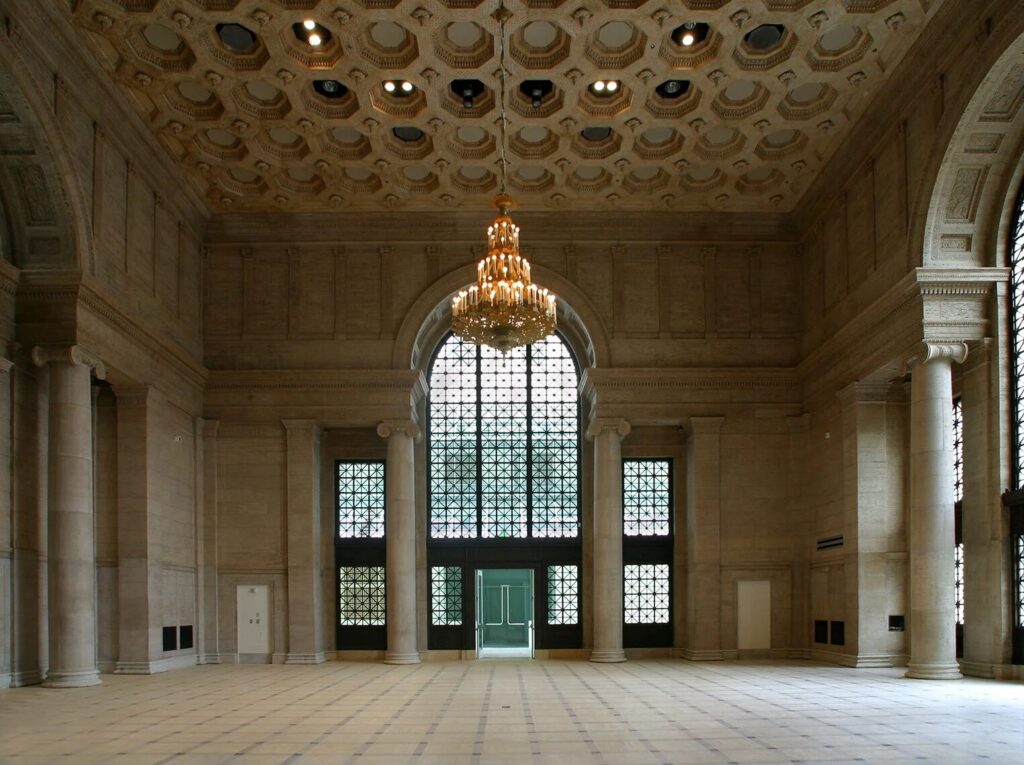
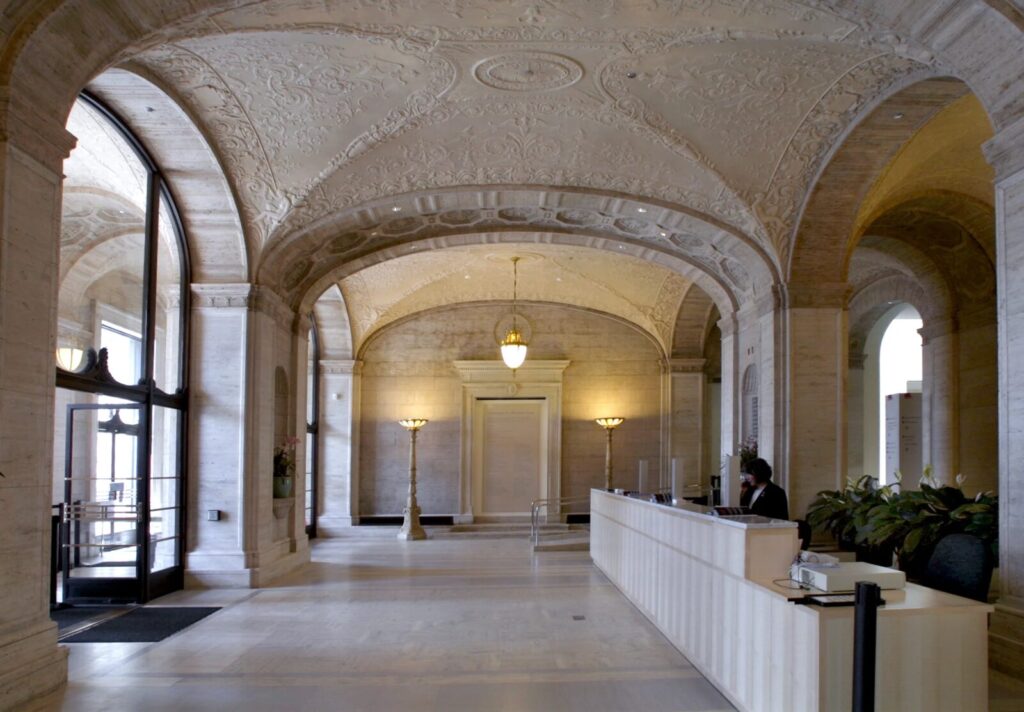
La fachada Beaux-Arts se conservó prácticamente intacta: no debe confundirse esta intervención con un nuevo revestimiento de caliza. En el interior, la escalera principal conserva suelos y paredes de mármol y travertino; Samsung Hall mantiene sus paramentos de travertino.
La piedra existente se conserva dentro de una adaptación contemporánea al uso museístico.
Colaboración de estudios internacionales especializados en arquitectura y conservación.
Respeto y reinterpretación del patrimonio mediante lenguaje arquitectónico contemporáneo.

STONEGAL · ARCHITECTURE
Asian Art Museum in San Francisco: Gae Aulenti’s renovation retains marble and travertine
Estados Unidos
The 2003 intervention converted San Francisco’s former public library into the Asian Art Museum. Gae Aulenti’s project retained historic spaces where marble and travertine remain part of the interior route.
The rehabilitation project of the Asian Art Museum in San Francisco involved collaboration among the firms Gae Aulenti, LDA Architects, HOK, and Robert Wong, culminating in 2003. This convergence of practices brought diverse approaches to the restoration and updating of the building, reflecting the interdisciplinary scope of the intervention.
The Beaux-Arts exterior remained virtually intact: this was not a new limestone cladding project. Inside, the grand staircase retains marble and travertine floors and walls; Samsung Hall also retains its travertine wall surfaces.
Existing stone is retained within a contemporary adaptation for museum use.
Collaboration of international architectural and conservation studios.
Respect and reinterpretation of heritage through a contemporary architectural language.